Tuesday, July 4, 2017

Muddling Through May

May is a split-personality month for birders.  It starts with the excitement of migration which begins in April but often peaks in early May.  On the other hand, the month ends with the heat of summer and a bird population comprised chiefly of the usual suspects -- 12-month and summer-only residents.  The migrants that cause the fevered-pitch birding of April and early May are gone.

In Gainesville, April and May were hot and as dry as tinder.  Seemingly endless sunny days offered picture postcard promises, but the lack of rain created a drought of almost historic proportions, and much of the landscape turned brown.  Lake levels dropped and only drought-tolerant plants really thrived.

My friend Rex Rowan and I started the month with a walk along the Lake Pithlachocco Trail in the Newnan's Lake State Forest.  We had a great morning with about 30 species, highlighted by a Cape May Warbler in a wild plum tree.  But my favorite sighting happened when I noticed something dart high into a tree above my head.  We searched for the bird and found more than we were expecting.  It was a Ruby-throated Hummingbird's nest.
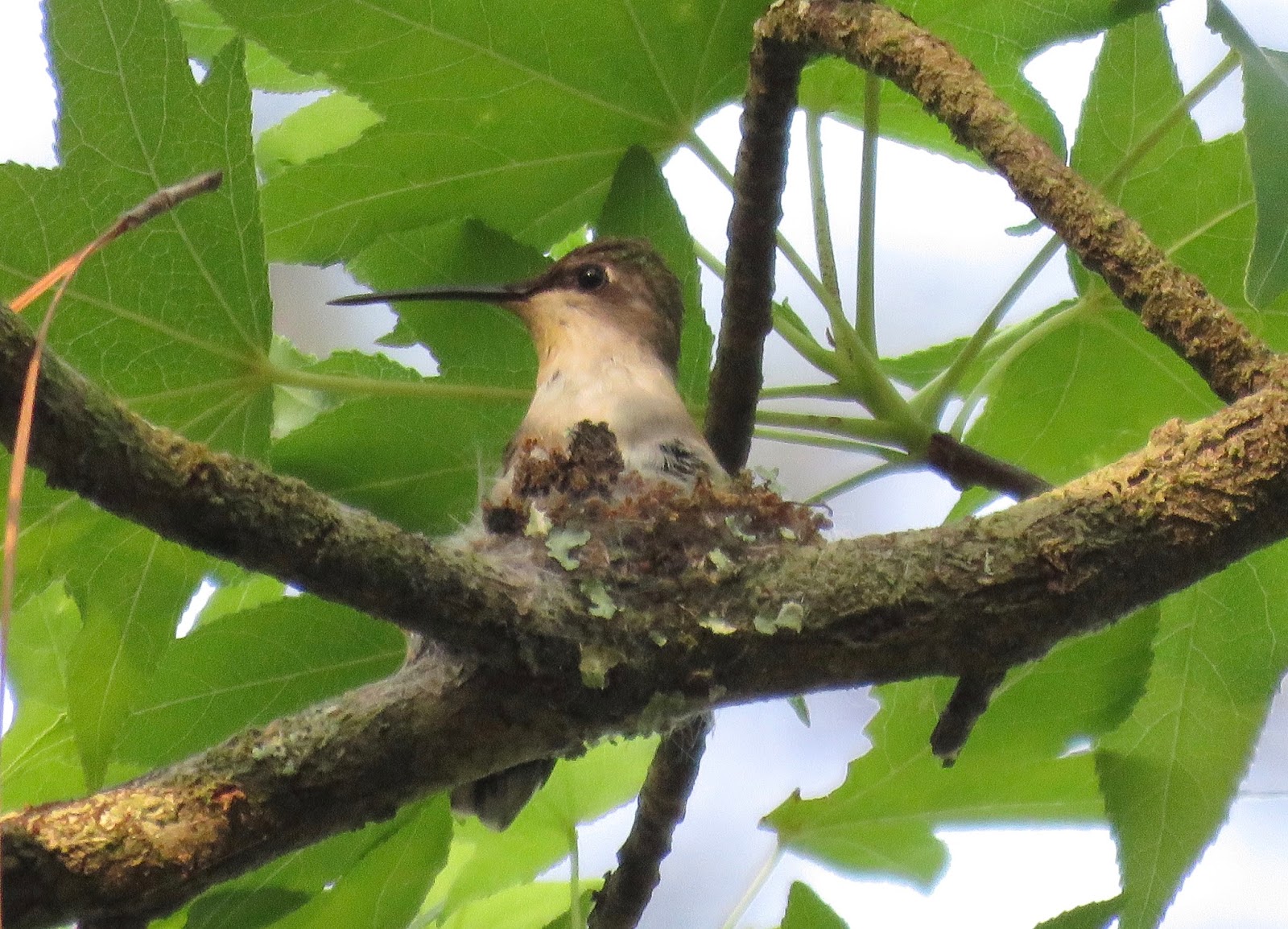

We had about 30 species during the morning, including a Cape May Warbler in a wild plum tree and another in some grapevines, but seeing this lovely lady working on the nest felt more like I had been given a rare privilege.

It was a promising start to the month, but the rest of the month was disappointing in some ways.  It seemed that field trips were much less successful than watching feeders in the back yard.  Early May can surprise and delight with rare feeder visitors like this Rose-breasted Grosbeak.


Northern Parulas are in their best plumage in May, with fresh, vibrant colors adorning their throats and breasts.


Even the local crowd is breaking out their fresh plumage and putting on a show.  This Red-bellied Woodpecker was sporting the crimson patch on his belly that gave the species its name.


 Of course, much of the bird activity disappears when a Red-shouldered Hawk decides to take a bath.


Still, it's the migrants we're really looking for, and this beautiful female Painted Bunting added quite a thrill.  She showed up on May 7 and hung around for a couple of days.  


 Occasionally Alachua Audubon offers a field trip to the Jacksonville area that typically begins at Huguenot Memorial Park.  I look forward to this trip a lot.  I love the opportunity to study shorebirds and large numbers of gulls and terns.  This year, however, the morning was marked by driving winds that urged the birds into cover and whipped the sand into an abrasive cloud that lashed us unmercifully while we trudged along the beach.  I couldn't hold the camera steady at all, a sand found its way into my ears (sneaking past my hearing as!) and even into my mouth.  Every time I tried to speak, sand crunched between my teeth.  Early in I got this distant photo of a Black-bellied Plover.


A few hours later I saw some Royal Terns doing their best to ignore the wind while ensuring the survival of their species.


 The conditions improved significantly once we left the coast and focused on several spots on Fort George Island.  Unfortunately, photography continued to be a challenge.  Only the larger birds seemed to venture out into the open.  While not a "countable" bird, I appreciated the peacock's willingness to pose for pictures.


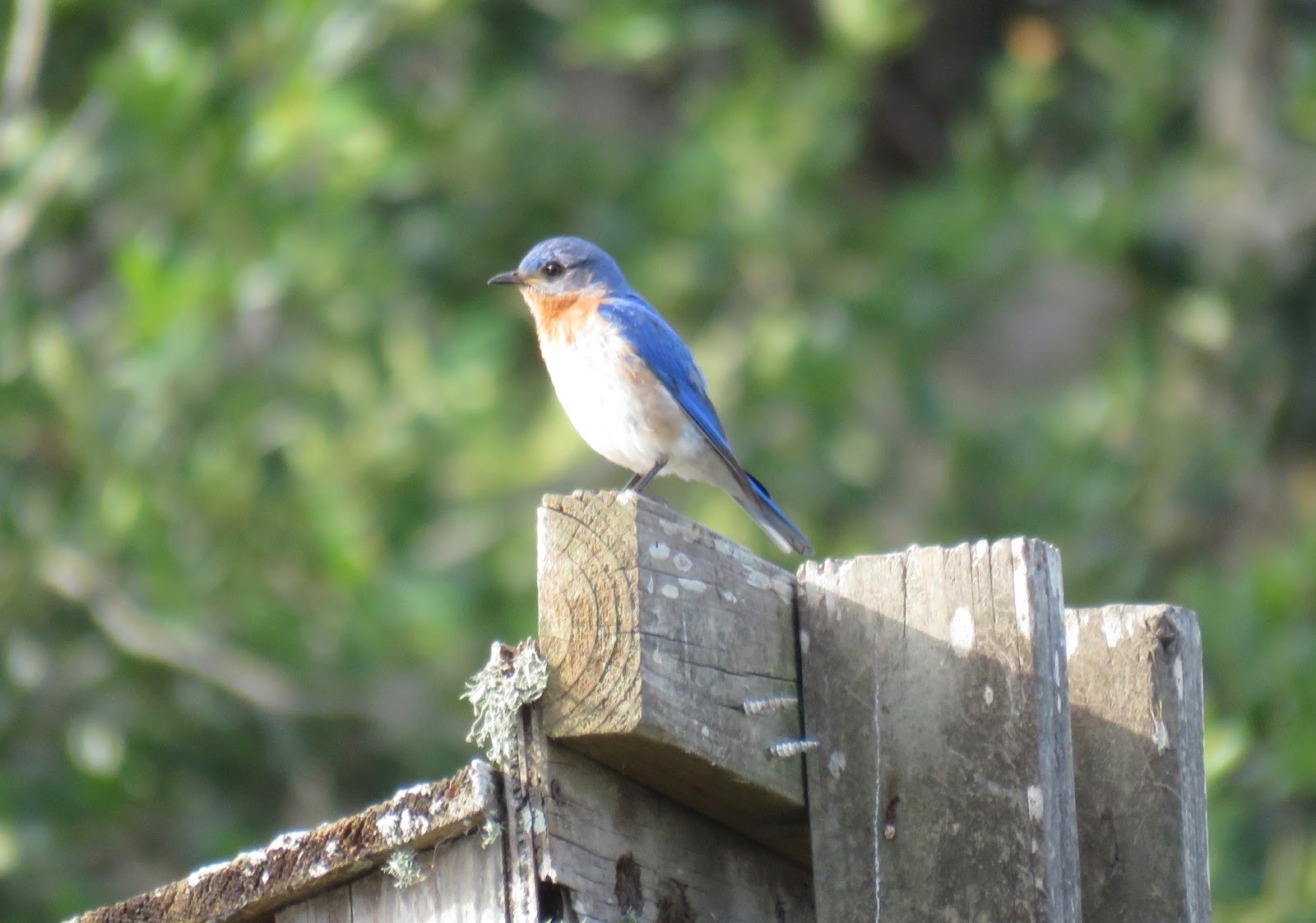
A week later I led a field trip to Alligator Lake in Lake City.  Fortunately, we proved we could have lots of fun without lots of birds.  We only had about 25 species, a very low number for such a great environment.  This Eastern Bluebird perched up early on the trail, but it was one of the very few birds to do so all morning.

 In fact, I spent time photographing a Zebra Longwing butterfly on some lantana ... a sure sign of a bored birder.


Meanwhile, three of my friends were using their great cameras to photograph a Wood Duck way out on the lake.  I had to settle for photographing them:

Tina, Jerry, and Stephanie, good birders, photographers and friends.
Meanwhile, back at the feeders ...

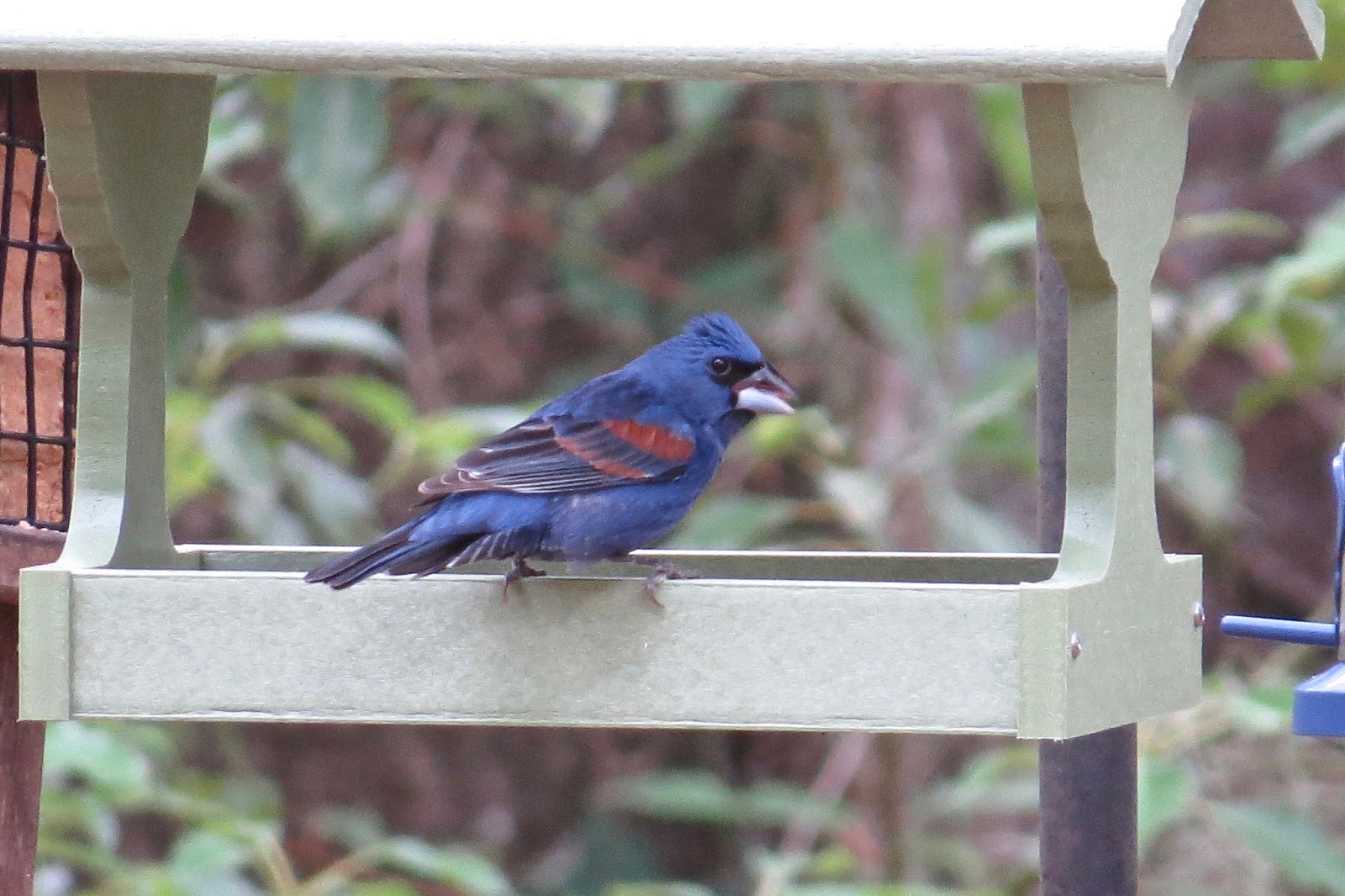
Blue Grosbeak
 The combination of the sand blasting at Huguenot Park and a rugged life on the birding trail had taken a toll on my Canon camera.  I enjoyed it a lot, and took many really good photos.  But now it had started doing some odd things at inopportune moments.  I did some internet research and talked to some friends before finally settling on a Nikon Coolpix P900.  Of course, as soon as I got it, I had to start snapping away, whether there were birds anywhere nearby or not.

Mimosa after an early morning rain.
Then I tried shots at distances I could not have tried with my old camera.

White-winged Dove in the back of a yard, well away from where I stood.  Could not have done it before.
Red-shouldered Hawk across a long lawn and up on the wires.  Could not have done it before.
And then there were details I didn't capture before.

House Finch eating Nutrasaff from Wild Birds Unlimited. 
Red-bellied Woodpecker sunning himself on a branch above my feeders.
Great Crested Flycatcher, one of my favorite birds of summer.
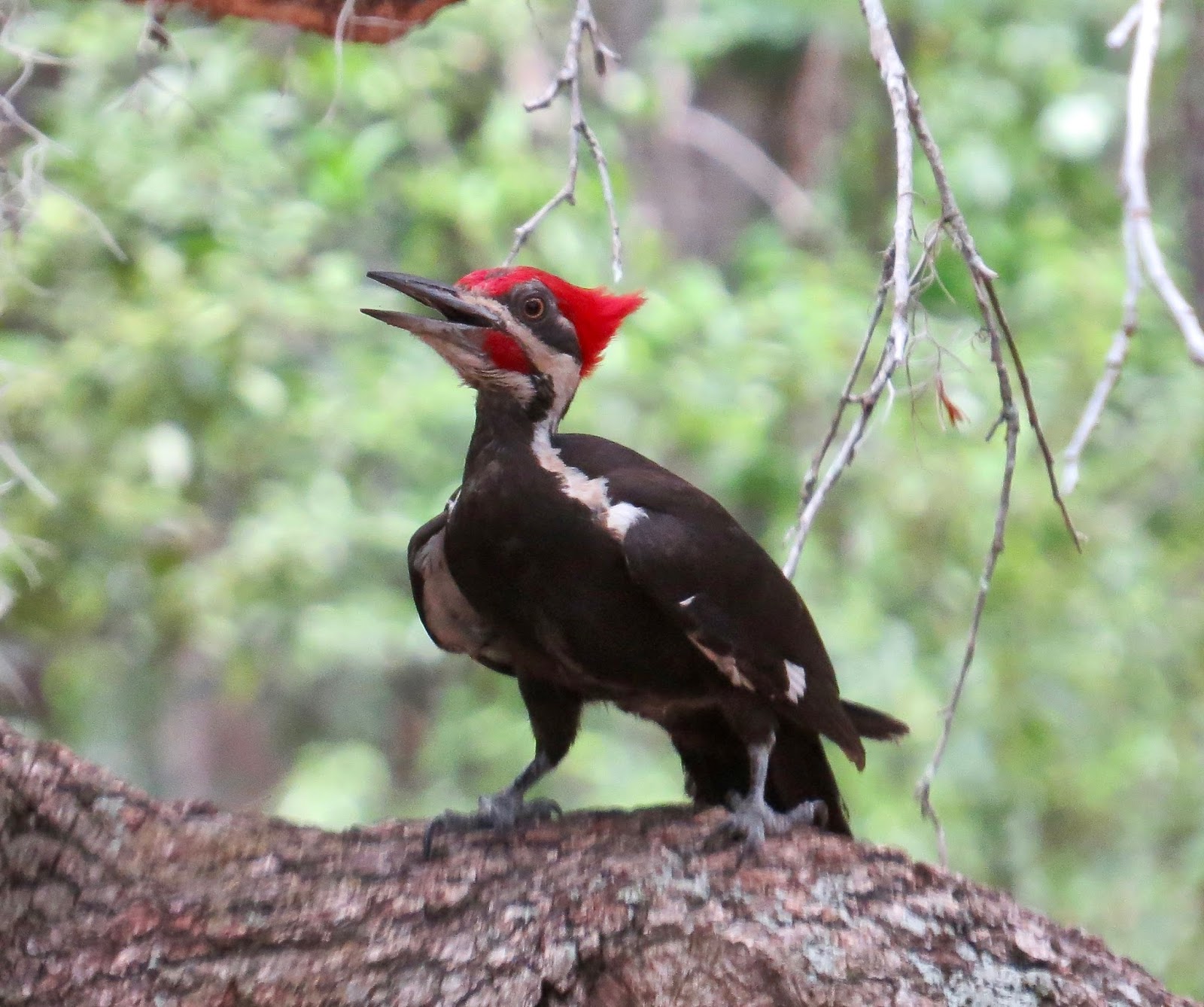
Pileated Woodpecker.  This one was looking for a dip in a drip pool. 
Of course, spring migration and fresh plumages are all about the annual ritual of mating, nesting, and raising young.  And this month held true to form.  May ended with a welcome sight, a young Eastern Bluebird, still sporting its juvenile plumage.


April had ended with my 2017 Alachua County total standing at 141 and my Florida total at 197.  Despite the promise of more migrants in May, a variety of factors outside my control had really limited my birding success.  For the month I had only 45 species within the county (my lowest total in over a decade), and a total of 80 within the state (another all-time low).  Accordingly, my county total for the year inched upward by only two to 143, while my state total increased to 203. 

While May was disappointing, June was certain to be very special.  The June Challenge was about to begin, and I had a trip out west that I know you'll want to hear about.




Tuesday, May 16, 2017

A Ruff April!

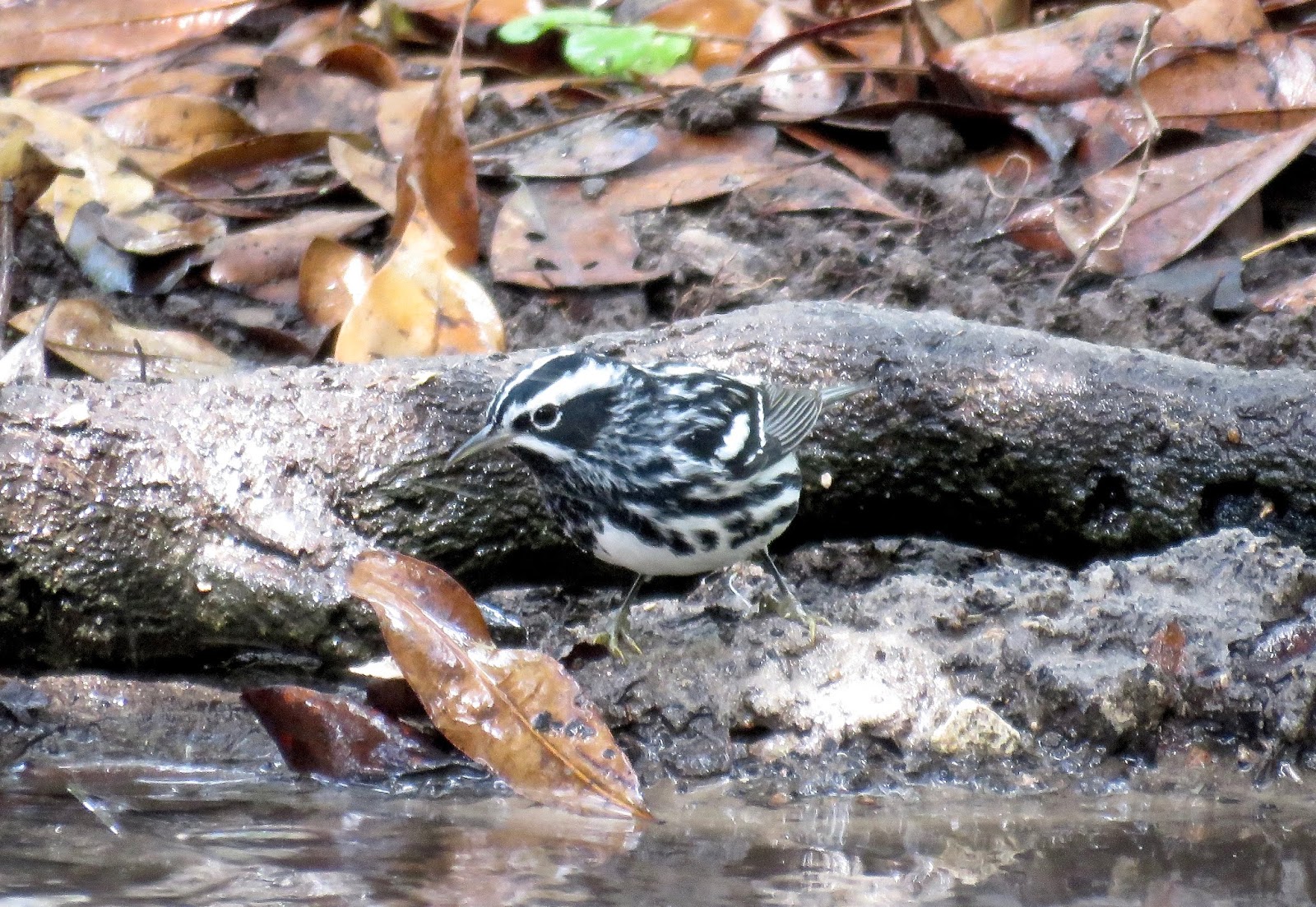
During the third week in April, a couple of things conspired to keep me close to home, but that doesn't mean I had nothing to look at.  I've always said that you can do some really good birding by looking out your window at some feeders or some dripping water.  That seemed to be the theme for the week as I didn't get to make any special trips.  But what's not to love about this gorgeous Black-and-white Warbler contemplating a dip in a nice puddle?


Look up in that tree.  It's a White-winged Dove!


Back at the puddle, a Northern Cardinal is sure enjoying a refreshing dip.


April is that wonderful time when summer residents are arriving, migrants are passing through, and some winter residents are still hanging around.  This American Goldfinch was waiting for his spectacular breeding plumage to come in before heading north.  I'd say he's looking mighty good!


Of course it's easy to look spectacular when you're all decked out in your gold and black breeding finery, but some of us think charcoal gray is wonderfully sleek and elegant.  This Gray Catbird is ready to travel to his home, perhaps in upstate New York or somewhere in southern Canada.


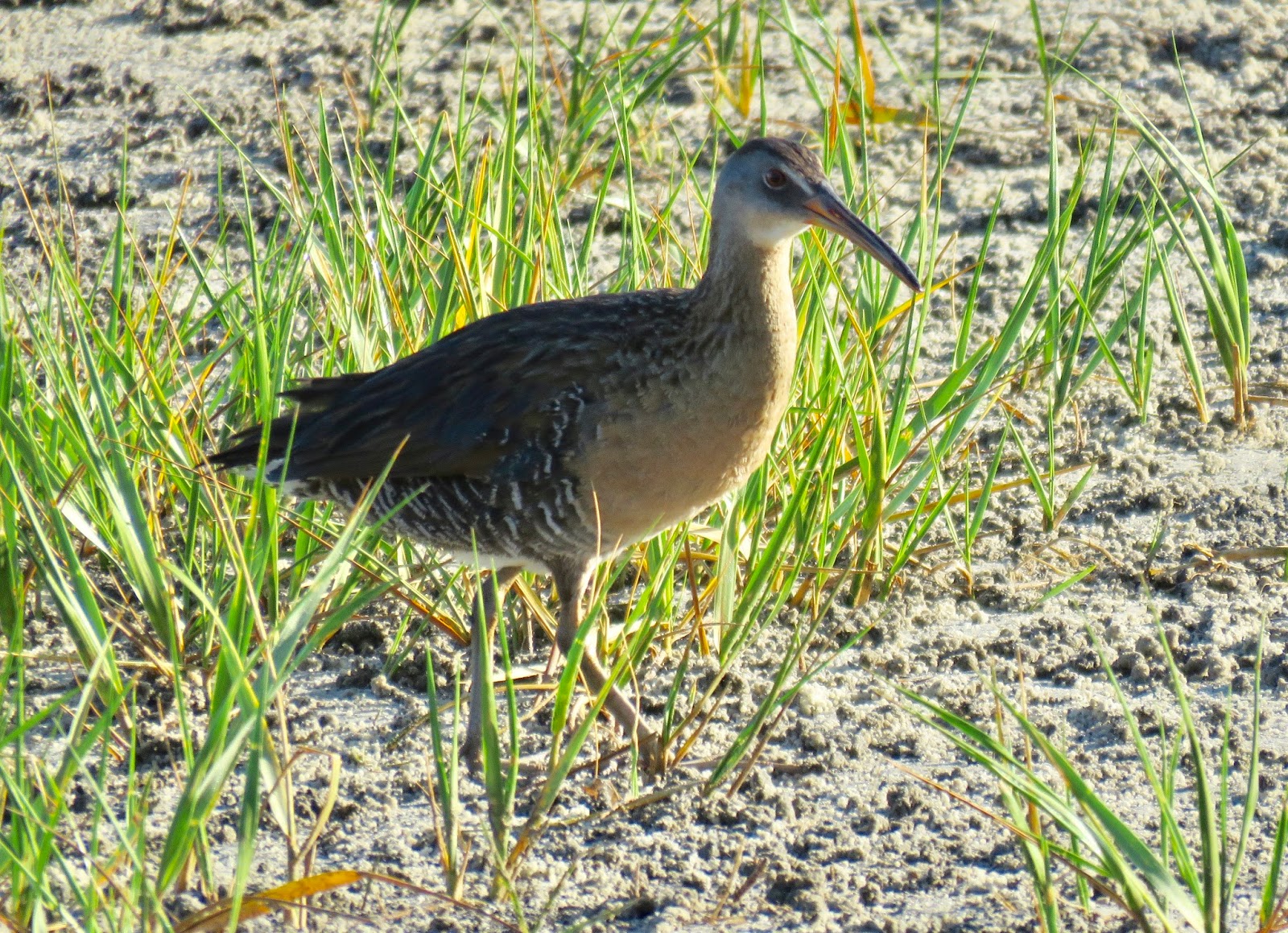
Finally, on April 20, I welcomed the chance to make my way toward Cedar Key with about 18 others in my Third Thursday crew.  We started out at Shell Mound where we had two delightful surprises awaiting us.  When we first arrived I told the group that we should try for Clapper Rail.  "Watch the tall grass along the boardwalk really carefully," I said. "Maybe we'll get lucky and see a Clapper sneak past us."  I took out my phone and played a rail song ... and got an immediate answer from directly behind me.  There was a Clapper Rail - not sneaking by - but right out in the open, blithely ignoring us while hunting in the short grass near the water's edge.  He posed for us for five or six minutes while we chatted, oohed, and ahhed just twenty or thirty feet away.


So while we were standing there watching the Clapper, I guess we aroused the curiosity of at least one other traveler.  Suddenly someone in the group called out for us to be still and look on the railing to our left.  There, nestled among us, was a Barn Swallow, perhaps newly arrived from a long migratory journey and looking for a place to rest.  It sat there for a minute or two, flew off a short distance when we began to move again, but came back to the same spot to rest for a few more minutes.  My friend Jerry Pruitt got this photo, which I think is priceless and I use it here with Jerry's permission.

Barn Swallow at Shell Mound.  Photo by Jerry Pruitt.

Jerry is a great guy, and very humble, so I'll do a bit of bragging for him.  He is a hell of a photographer.  Shots like the one above are nothing unusual for him.  In fact, I have another example of his work below, again used with his permission.  We saw this Gray Kingbird on a wire in Cedar Key.  I took a bunch of photos of this same bird, and none of mine turned out well.  But Jerry got this one:

Gray Kingbird in Cedar Key.  Photo by Jerry Pruitt

We had a great day kicking around Cedar Key.  At the cemetery we found this beautiful Great Crested Flycatcher.


But the best stop of the day was at the museum.  There we found Cape May, Blackpoll, and Worm-eating Warblers as well as the star of the day - this gorgeous Red-breasted Nuthatch.  It was only the second time I've seen one this far south.  It scrambled from branch to branch just above our heads for a good long while.  Its constant movement made it a challenge to get everyone on it, but it was well worth the effort.  For many in the group it was a life bird - a reason for celebration for all of us.


Meanwhile, back in Gainesville, Matt Bruce and Rex Rowan were kayaking on Newnan's Lake, looking for something unusual.  Did they ever find it!  The recent drought has been severe.  About the only benefit to the increasingly shallow water of the lake is that in past droughts it has attracted several rarities.  This year would prove the rule.  In the southeast corner of the lake, where Prairie Creek flows into it, they found a mixed flock of shorebirds.  Among them was a striking bird that was darker than the rest.  It was a Ruff!  This is a seriously rare bird for central Florida.  I've only seen one other and its plumage was pale and almost featureless.  Not so with this bird!  Fortunately, it stayed in that spot for the better part of a week.  The location was ideal for us landlubbers.  The fishing pier at nearby Powers Park afforded a great spot from which to observe the bird.  A scope was needed to get a really satisfying view, but the bird could be picked out of the crowd of other shorebirds with a good set of binoculars.  I got to Powers in the early afternoon of the 24th, and a group of other birders was already there.  I have a great scope, so I checked out the bird and then stood aside while some local grad students from the University of Florida picked up their lifer.  The distance was too great for me to get a usable photo, but the generosity of others filled the void.  The photo below was provided by local nature photographer Glenn Price and is used here with his permission.

Ruff at Newnan's Lake.  Photo by Glenn Price.

A day later the Facebook page dedicated to Florida birding got lit up with word of a fallout in the Fort DeSoto area.  It was already getting late in the morning, so a four and a half hour trip south to get there wasn't in the cards.  However, if there were birds dropping in at Fort DeSoto, maybe they were moving into Cedar Key as well.  We piled into the Big Red Van and ninety minutes later we were looking at some terrific birds.  I drove directly to the museum grounds, thinking that it had been a hotspot a week earlier, so why not start there?  It was a good call, but it started slowly.  At first, the only birds we saw were a couple of Indigo Buntings playing in a birdbath and grazing along the ground.  This one still hadn't reached the fantastic electric blue of the breeding plumage, but he was getting there.


However, within seconds even the Buntings were gone.  Nothing was moving at all.  Then I looked to my right, at eye level about 15 yards away.  There sat a Barred Owl, very much awake and active at noon!  It paid me no attention while I snapped multiple photos, and only left the area when it realized there was nothing to hunt.


Once the owl left, the other birds came out to eat and play.  Among them was my "first of the year" Swainson's Thrush.  In fact, we saw about a half dozen of them scattered around Cedar Key that day.  This one wasn't camera shy at all.


After leaving the museum grounds, we decided to walk around a nearby neighborhood that has been productive in the past.  This time it produced another real beauty, a female Scarlet Tanager!  Here she is.


The bird world is filled with wonders, not the least of which is the differences between male and female of the same species.  Generally, the male is the prettier, needing every bit of his good looks to attract a female in the hopes of starting a family.  Prettier is one thing, completely different if quite another.  The male and female Red-winged Blackbirds don't look at all alike.  And the Scarlet Tanager is another example.  While the female is the lovely yellow and olive pictured above, the male is quite different:


That scarlet and black is breathtaking!  We saw this handsome guy near the Episcopal Church on Fifth Street.

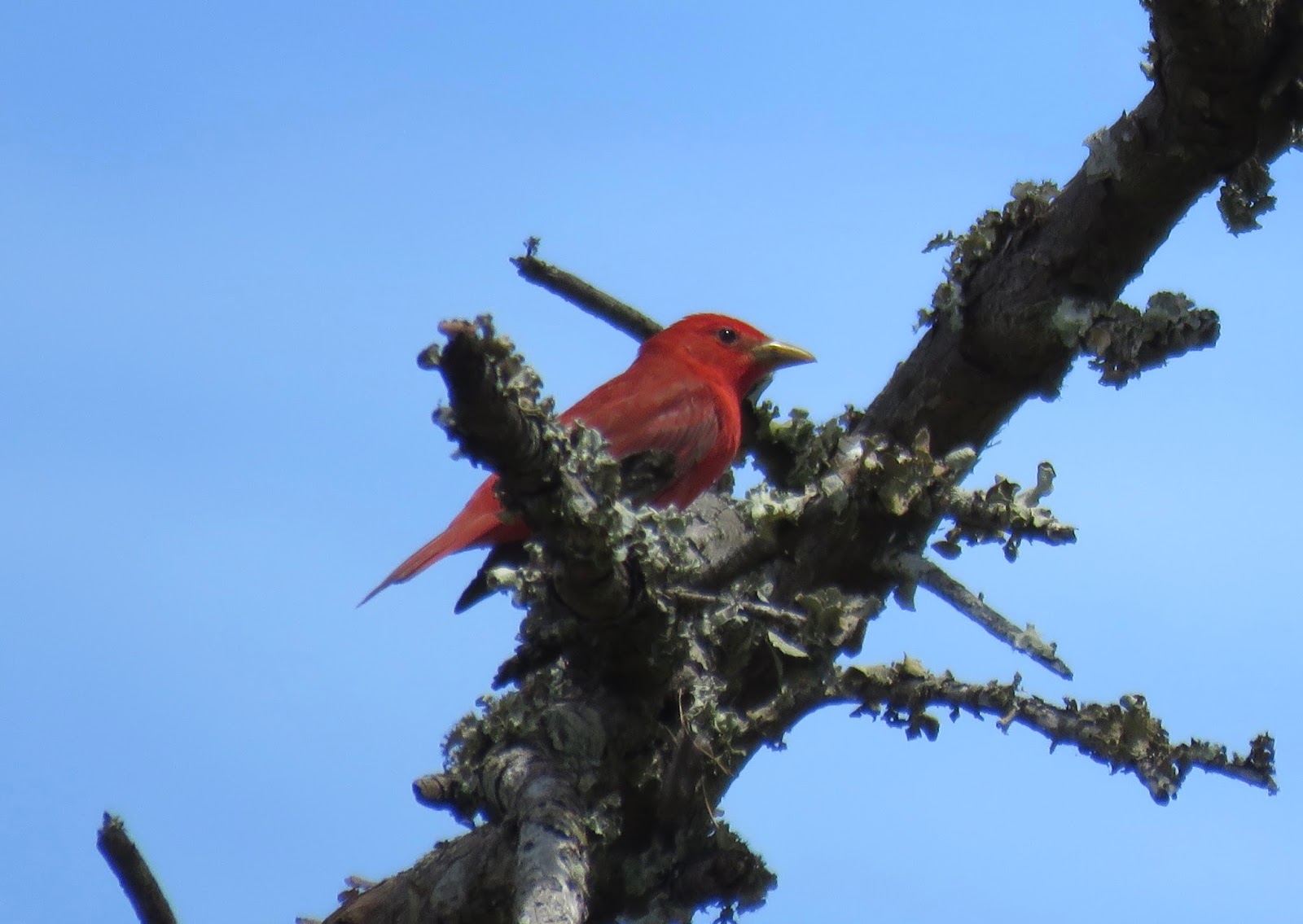
Not to be outdone by his Scarlet cousins, this male Summer Tanager made an appearance early in the afternoon.


We also had a little luck at the cemetery.  John Hintermister and Pat Burns helped me see a Blue Grosbeak, but it escaped before I could grab my camera.  We returned the favor by getting them on a Rose-breasted Grosbeak.  It played hide and seek among the leaves, so this is the best photo I could get.


April was proving to be a bountiful month, and it held one last treasure waiting to be discovered.  On the 26th I led my monthly bird walk at Sweetwater Wetlands Park in Gainesville.  I've shared dozens of photos from there in the past, but this day held one very special bird.  Near the end of the walk we found a small flock of Bobolinks.  It was a long distance for a photo, but it turned out fairly well.


So April drew to a close.  It was a wonderful month, filled with colorful migrants and a couple of local rarities.  For the month, I only had 83 species in Alachua County, but a total of 132 overall.  My year totals were getting a little more respectable.  My county total had reached 141, and my state total stood at 197, both decent numbers for someone not chasing a big year.  

In closing, here's a bonus photo for you butterfly lovers.  While standing on the pier watching the Ruff, a Red Admiral landed right next to my shoe and spread its wings displaying its stunning good looks for all the world to see.  The world continued to stare at the Ruff, but I stepped back, took my camera out, and snapped the photo below.


Sunday, April 23, 2017

Woohoo! It's April

Finally, April is here and the first real signs of Spring migration, 2017, came with it.   Don't you love spring?

I started the month birding at yet another new place.  Thanks to Deena Mickelson, a small group gained access to the Rosemary Hill Observatory near Bronson in Levy County.  She invited the three members of the Alachua Audubon Society's Field Trip Committee to look at the property as a possible field trip site for the 2017-2018 schedule.  I had hoped to see my first migrant warblers of the year there, but it was not to be.  We had a terrific morning, watched a couple of Great Horned Owls fly around the property, and saw a good collection of birds, but none of them were particularly cooperative about posing for the camera. And there were no migrant warblers.  Deena was nice enough to share this photo of  (left to right) Rex Rowan, me, and Barbara Shea near one of the two observatories.

Rex, me, and Barbara near the observatory.  Photo by Deena Mickelson.
To tell the truth, I mark the real beginning of spring migration each year with one eagerly anticipated event - the arrival of the first Ruby-throated Hummingbird of the year at my backyard feeders.  This year I waited a long time.  The hummers were about two weeks later than what I've had in the past, but finally, on April 4, there it was!


There she is ... my first Ruby-throated Hummingbird of the year.  Let migration begin!
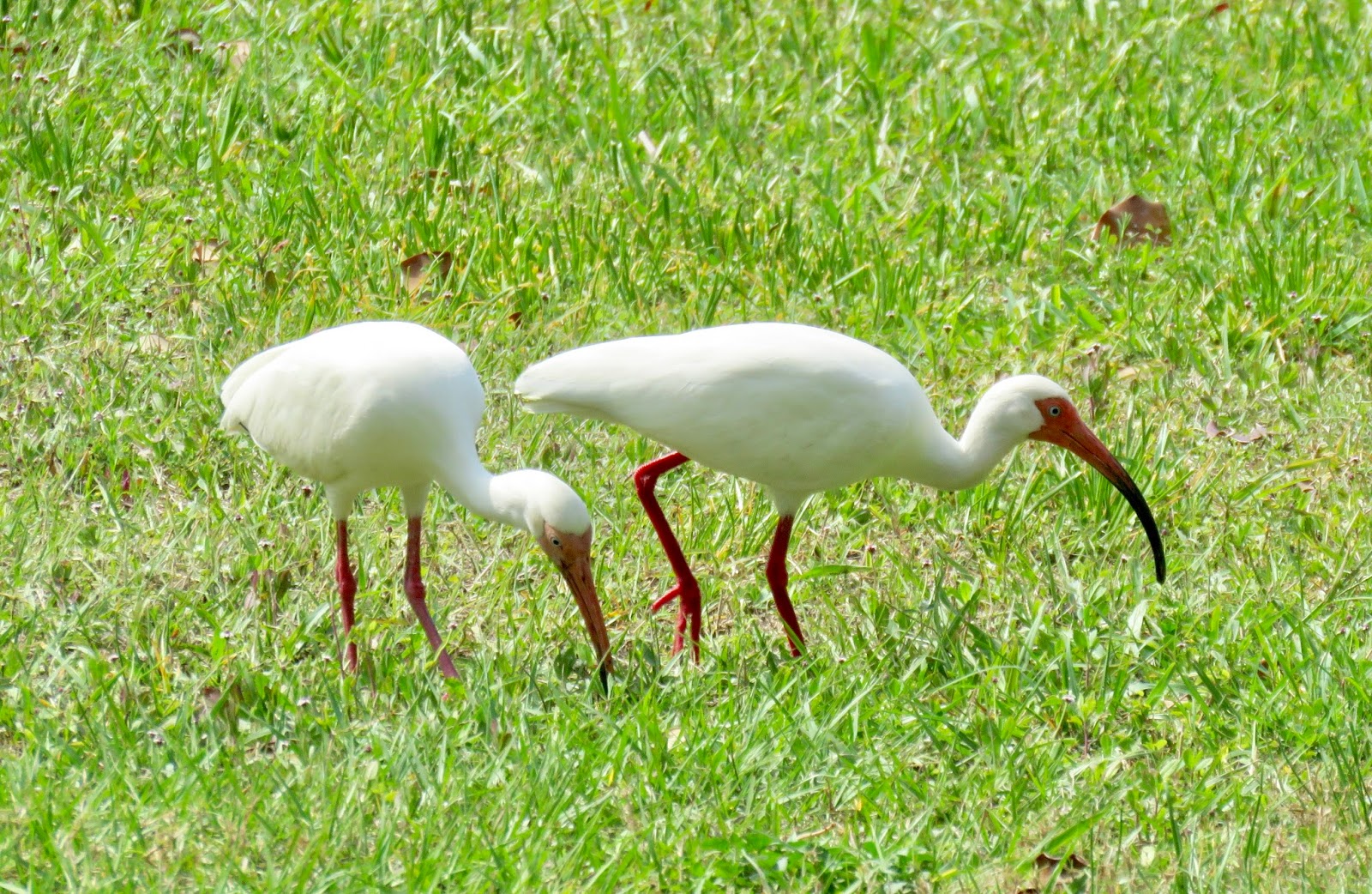
The next day (April 5) I made the trek over to Cedar Key, drooling all the way.  Surely today would bring the first batch of migrating warblers!  It started slow.  I took a photo of some White Ibises because I liked the deep red of their bills and faces.  That's a sign of breeding plumage and spring!  So, where are the warblers?

White Ibises trolling for bugs in a yard in Cedar Key.
Okay, it was starting off really poorly -

Brown-headed Cowbird.  Hey, there was nothing else to photograph!
My first stop of the morning was at the Episcopal Church.  For many years, their parking lot has been graced by the presence of a couple of gorgeous mulberry trees.  During every spring, migrating tanagers, orioles, and warblers joined the wintering Gray Catbirds in gorging themselves on the luscious fruit.  But some time since last spring the church leaders decided to prune the trees, drastically reducing the amount of fruit they could produce.  Then Hurricane Hermine came through and did additional damage.  So this year there was little fruit and almost no migrants in the parking lot.  A great birding hotspot has gone cold.

Next I drove along the road to the airport.  The small beaches had a few nice sights.  All winter long, our Willets are a pale, drab gray.  In spring, their plumage takes on some interesting patterns.

Willet finding a small snack.
Typically, our Sanderlings are also pale and gray.  Then they start getting good looking!

Sanderlings at Cedar Key
Cedar Key suffered another bout with Mother Nature this year, and the result was not good for birders.  For example, the docks on the way to the airport were always a haven for shorebirds seeking safe ground at high tide.  Hurricane Hermine wiped out nearly all of these docks leaving only scattered posts and some debris.  Gulls and terns are using the remnants, but the shorebirds have largely disappeared.

Royal Terns on posts where there used to be a dock.
One thing has remained the same.  The Brown Pelicans still find resting places near the public beach.

Brown Pelican near the public beach and tour boat docks in Cedar Key.
So, this trip to Cedar Key produced zero migrating warblers.  Will this warbler drought never end?

Not to worry ... the drought came to an end just two days later when one of the Ewing brothers found a Swainson's Warbler right there in Gainesville at the Loblolly Environmental Center!  We can go many years without seeing a Swainson's in Alachua County, so this was a great find.  I didn't get there until early the next morning, and I had myself convinced that the bird would be long gone.  But hope is the life blood of birders, so a friend and I found ourselves walking the Loblolly boardwalk looking for the marker left for us to show where the bird had been a day earlier.

Part of the boardwalk at Loblolly Environmental Center.
Almost as soon as we arrived, we saw a Prairie Warbler, the first migrating warbler of spring for me.  Here's a photo.  It's not perfectly clear, but it was a breakthrough bird.

Prairie Warbler at Loblolly
Eventually we got to the right spot, and there was the bird.  After so much work and waiting, this one was fairly easy!

Swainson's Warbler at Loblolly Environmental Center.
After seeing the Swainson's we continued along the boardwalk and added Black-and-white, Palm, and Yellow-throated Warblers to the day's list.  And just before the end of the boardwalk we found two American Redstarts.  Migration was on!

Meanwhile, back at the drip pool, I got this photo of a Gray Catbird that I really like.  How can plain gray look so beautiful?

The Gray Catbird is one of the last wintering birds to leave Florida.
On April 11, I had the opportunity to take my friend Rex Rowan out to rural Gilchrist County to visit Bell Ridge Wildlife and Environmental Area.  I wrote about this site a few weeks ago when I did a solo trek around its three-mile loop in search of Bachman's Sparrows.  I loved the place then, but I also knew it would be right in Rex's wheel house.  This is his kind of place.  I was not wrong.  We had a great time and Rex repeatedly found something to admire in the scenery as well as in the birds.

Bell Ridge WEA.  This part of the loop borders a local farm.
The wild flowers were just starting to bloom.  I don't know what kind of flower this is, but I like it.  If you know what it is, leave a comment at the end of this blog.

I love that color.
Bell Ridge is home to a large population of Red-headed Woodpeckers like this one below.


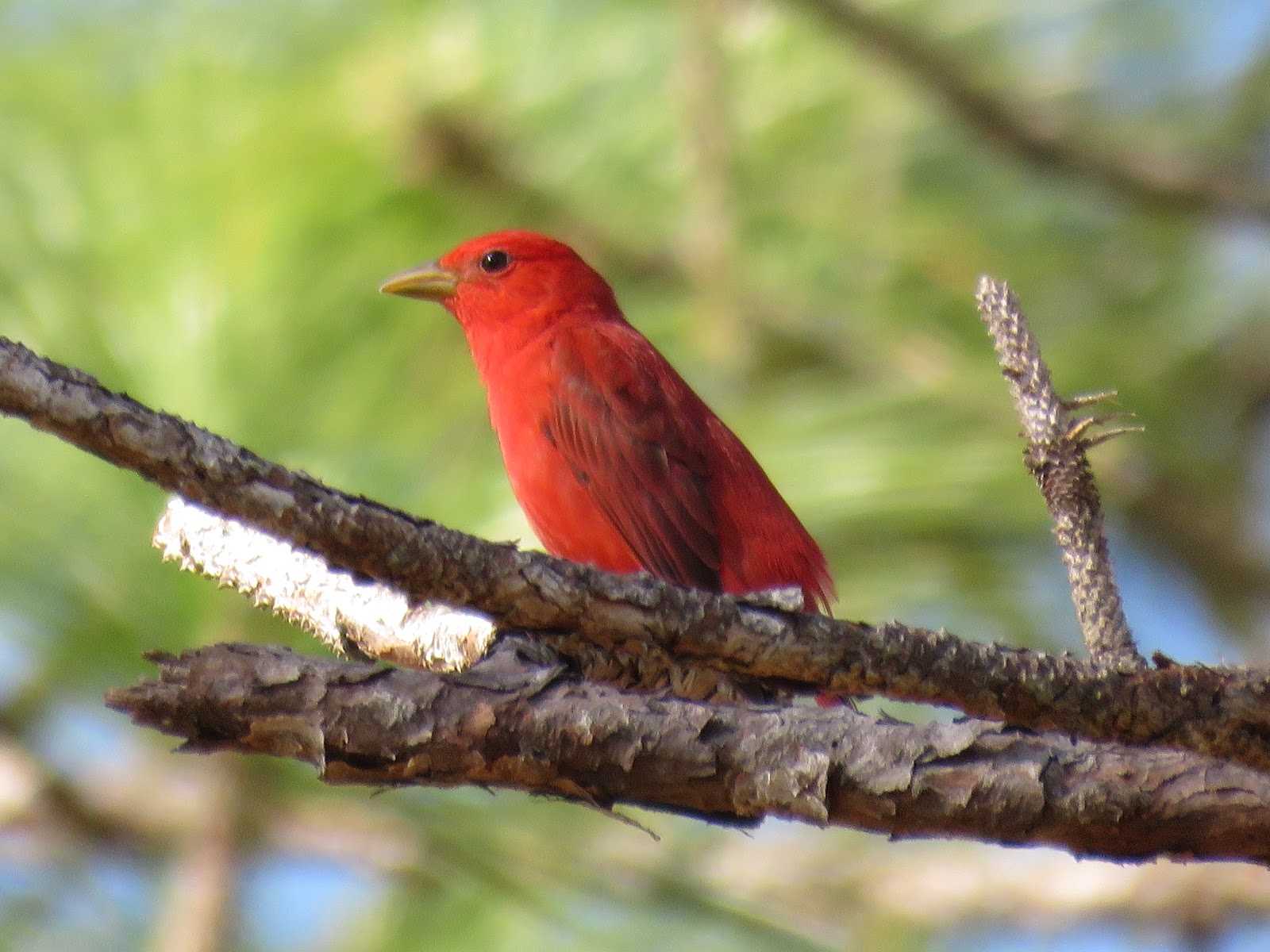
Along the way, we found my first Summer Tanager of the year.  This is a spectacular sight in a green forest!

Summer Tanagers are decked out in a vibrant red that is unlike any other.
But at Bell Ridge the star of the show is the Bachman's Sparrow.  We heard several, but for the most part they stayed hidden from us.  Finally one emerged from hiding just a few feet away and began singing.  For perhaps five minutes, it flew from bush to bush, always perching up where he could be seen.  Each time he resumed singing.  It was thrilling, reminding me once again why I'm a birder.

Bachman's Sparrow at Bell Ridge WEA.
Three days later (April 14) I was back in Cedar Key.  By that time, there were reports of neotropical migrants popping up from all over the area, so I was hopeful. Almost as soon as I arrived, I found an Eastern Kingbird.  This was a good omen.

Eastern Kingbird in Cedar Key.  
Things were quiet until I got to the museum grounds.  That's when it got better.  I never see a Yellow-throated Warbler without getting excited.  This one looked great, but kept hidden deep in a tree.  I was lucky to get this shot.


Then the day took a big leap forward.  One tree over from the Yellow-throated was a male Cape May Warbler.  They're one of my favorite warblers, and always a cause for celebration.  Just look at him!

Cape May Warbler at the museum in Cedar Key.
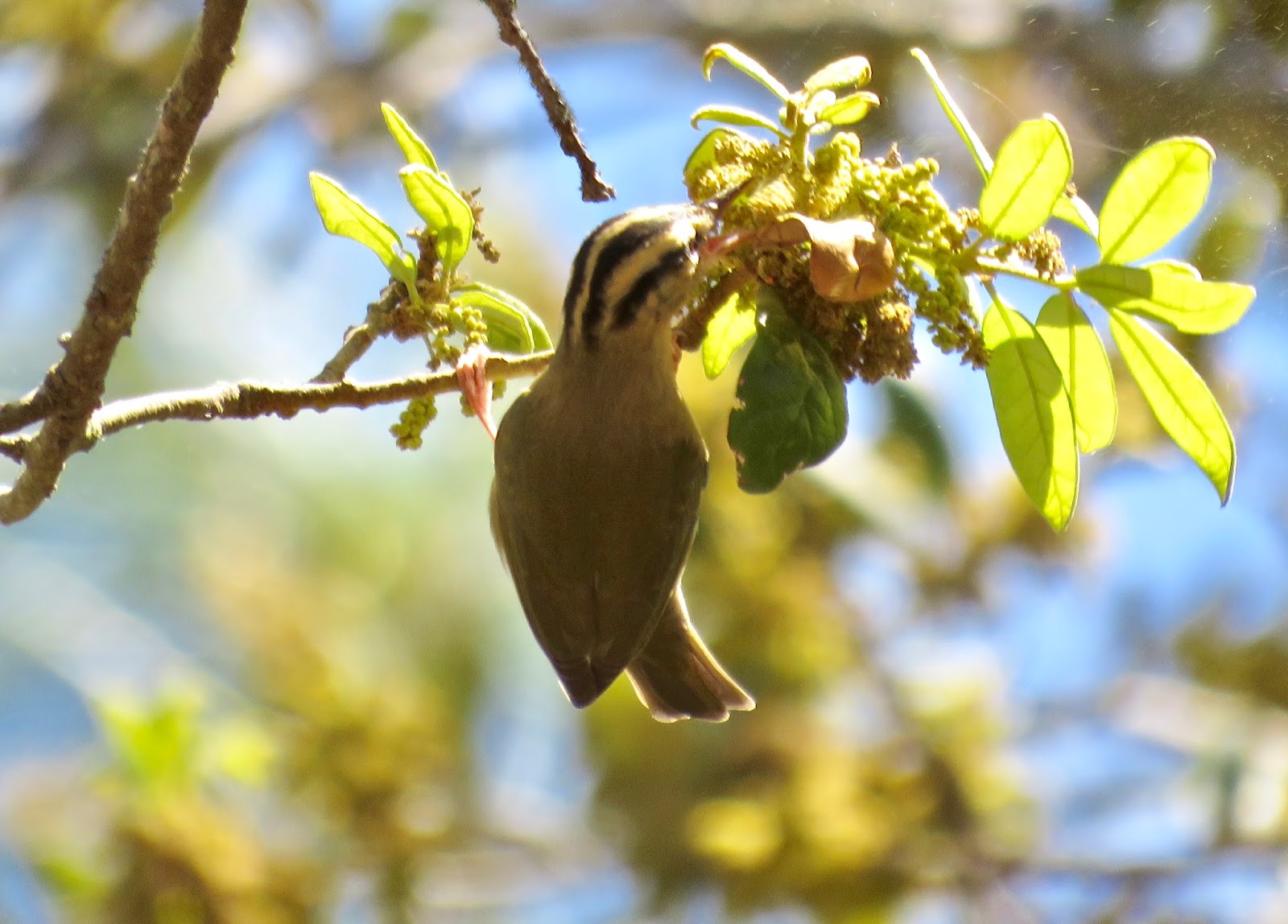
Then, in the next tree - Worm-eating Warbler, another highly prized migrant!  Here's a fun fact - Worm-eating Warblers live on a diet of insects and spiders.  They don't eat worms.

Look at those head stripes on the Worm-eating Warbler!
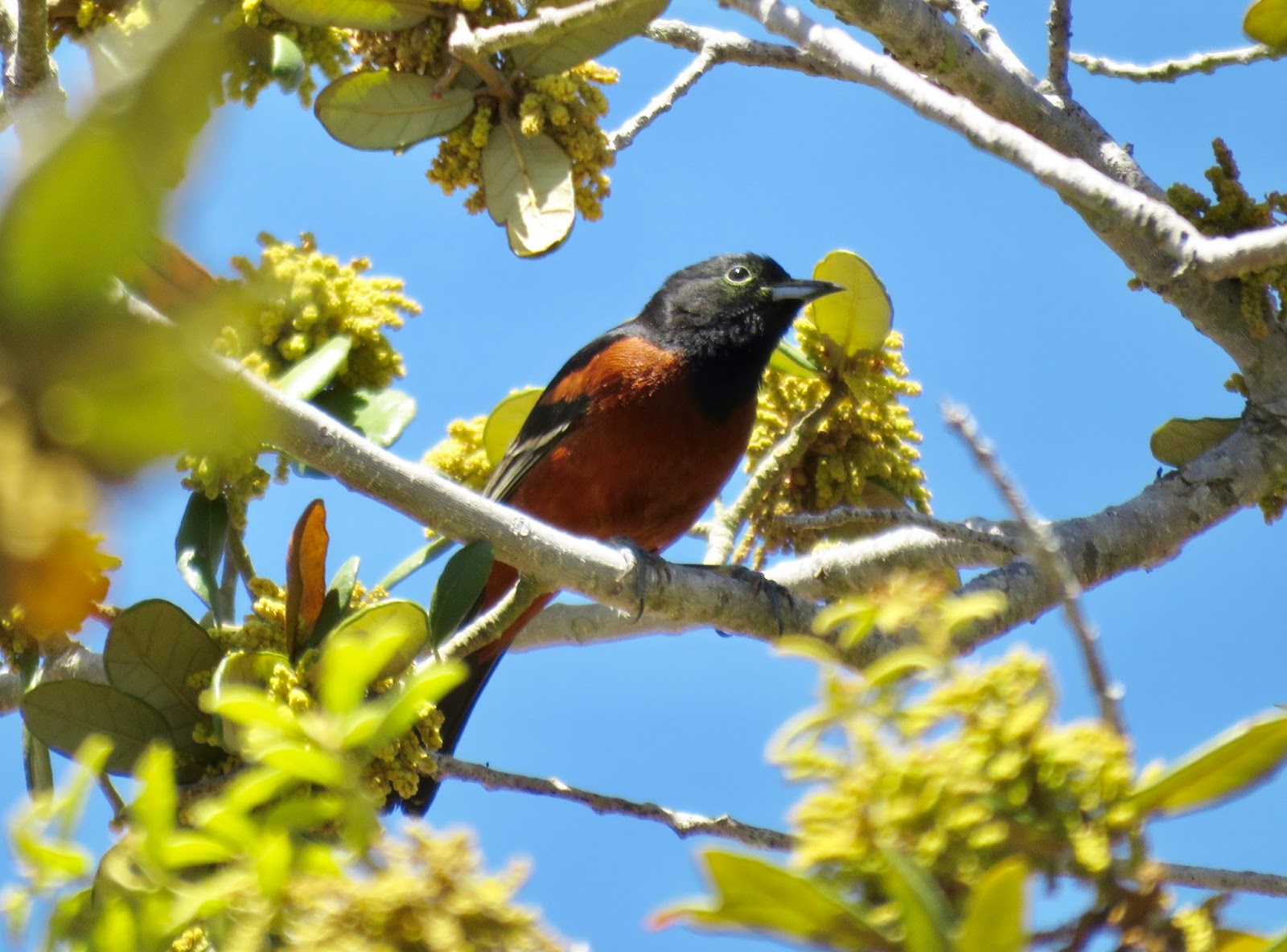
So, could it be four for four?  Three trees in a row had produced a great migrant.  Would the fourth produce another?  Well, no ... I actually had to walk about fifty yards to find another, but I can't complain.  The first half of April wrapped up with a wonderful look at an Orchard Oriole (below).  Migration is in full swing now, and in about two weeks I'll post another blog to keep you up to date.

Orchard Oriole at the museum in Cedar Key.